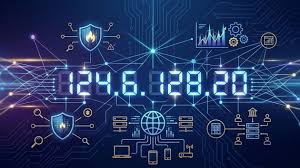
In today’s hyper-connected world, every click, login, and data request leaves behind a digital footprint. One of the most common footprints is an IP address like 124.6.128.20. At first glance, it may look like a random string of numbers, but in reality, it plays an essential role in how devices communicate across the internet.
This article breaks down what this IP address represents, how it functions in real-world networking, and why it might appear in your logs or online tools.
What is 124.6.128.20?
The number 124.6.128.20 is an IPv4 (Internet Protocol version 4) address. IPv4 addresses are unique identifiers assigned to devices or networks that connect to the internet. Think of it as a digital home address that ensures data packets reach the right destination.
Unlike domain names such as google.com, IP addresses are numerical. Computers use them directly to route information quickly and accurately.
However, what makes IP addresses like this interesting is that they do not always belong permanently to one device. In many cases, they are dynamically assigned by internet service providers.
How IP Addresses Actually Work
Whenever you open a website, send a message, or stream a video, your device communicates using IP addresses. The process happens in milliseconds:
- Your device sends a request.
- The request is tagged with your IP address.
- Servers respond using the same routing system.
- Data is delivered back to your device.
Without IP addresses, the internet would have no structured way of delivering information.
124.6.128.20 is just one node in this vast global addressing system.
What Can Be Known About 124.6.128.20?
While people often try to “track” an IP address, the reality is more complex. An IP like this can sometimes provide:
- Approximate geographic region (country or city-level, not exact location)
- Internet service provider (ISP) details
- Connection type (mobile, broadband, corporate network)
- Whether it is public or part of a routed network
But it’s important to understand that modern privacy systems, VPNs, and carrier-grade NAT can make IP-level identification less precise.
So, while 124.6.128.20 may appear in logs or analytics dashboards, it doesn’t automatically reveal a person’s identity.
IP Behavior in Live Traffic Logs
Imagine a small e-commerce website owner checking their server logs late at night. They notice repeated requests coming from 124.6.128.20.
At first, it looks suspicious—multiple page visits in a short time. After investigation, it turns out the traffic is coming from a mobile network where users share rotating IP addresses. What seemed like unusual activity is actually normal background traffic from different users sharing the same network gateway.
This kind of misunderstanding is extremely common in web analytics and cybersecurity monitoring.
My Experience with IP Tracking
I once worked on a website optimization project where a single IP address kept appearing repeatedly in analytics, raising concerns about bot traffic. After deeper inspection, it turned out the IP belonged to a large ISP using dynamic allocation. The system was assigning the same address to multiple users at different times of the day. That experience highlighted how misleading raw IP data can be without context.
Comparing IP Address Types and Behavior
To understand 124.6.128.20 better, it helps to compare different IP concepts side by side:
| Type of IP Address | Description | Example Behavior | Stability |
|---|---|---|---|
| IPv4 Address | Standard 32-bit numeric address | Like 124.6.128.20 | Can be static or dynamic |
| IPv6 Address | Newer 128-bit format | Longer alphanumeric string | More permanent and scalable |
| Public IP | Visible on the internet | Used by websites and routers | Often shared or dynamic |
| Private IP | Internal network address | Used in homes/offices | Not visible publicly |
| Static IP | Fixed address assigned manually | Used by servers | Rarely changes |
| Dynamic IP | Changes periodically | Common for home users | Frequently rotates |
This comparison shows that not all IP addresses behave the same way. The context behind them matters more than the number itself.
Why Would Someone Search for 124.6.128.20?
There are several reasons why someone might look up an IP like this:
- Checking server or website logs
- Investigating unusual login attempts
- Troubleshooting network issues
- Monitoring cybersecurity alerts
- Analyzing traffic sources in analytics tools
In most cases, the goal is not to identify a person but to understand network behavior.
The Privacy Layer Behind IP Addresses
Modern internet infrastructure is built with multiple privacy layers. Even though an IP address like 124.6.128.20 can hint at a general location, it is not a direct identity marker.
Internet providers often:
- Assign shared IPs to multiple users
- Rotate addresses frequently
- Mask internal network structures
- Use NAT (Network Address Translation) systems
This means one IP can represent dozens—or even hundreds—of devices at different times.
Security and Misinterpretation Risks
One common mistake is assuming that a single IP equals a single user. This can lead to:
- False accusations of malicious activity
- Incorrect blocking of legitimate users
- Misleading analytics conclusions
- Overreaction in cybersecurity alerts
A careful analyst always cross-checks IP data with timestamps, behavior patterns, and additional logs.
Everyday Role of IPs Like This
Even though it looks technical, 124.6.128.20 plays a simple role in everyday life:
- Loading your favorite websites
- Connecting apps to servers
- Enabling video calls and messaging
- Supporting online gaming sessions
- Routing emails and file transfers
Without IPs, none of these digital interactions would function smoothly.
FAQs
1. Is 124.6.128.20 a dangerous IP?
Not inherently. An IP address itself is neutral. Its activity determines whether it appears suspicious.
2. Can I find the exact location of this IP?
Not precisely. At best, you may get a rough geographic region depending on ISP data.
3. Why does this IP appear in my server logs?
It could be a user, bot, crawler, or even a shared network gateway.
4. Can an IP address identify a person?
No. It identifies a network connection, not an individual identity.
5. Does this IP always belong to the same device?
Not necessarily. Many IPs are dynamically assigned and change frequently.
6. Should I block this IP if it appears repeatedly?
Only if there is clear malicious behavior. Otherwise, blocking may affect legitimate users.
Also Read: Kitchens Designs That Make cuisine a Joy
Conclusion
The IP address 124.6.128.20 may seem like a simple sequence of numbers, but it represents a vital part of internet communication. It helps route data, connect users, and maintain global connectivity across millions of devices.
However, interpreting IP data requires caution. Without context, it can easily lead to misunderstanding or incorrect conclusions. Whether you are analyzing server logs, managing a website, or simply exploring network behavior, always remember that an IP address is just one piece of a much larger digital puzzle.