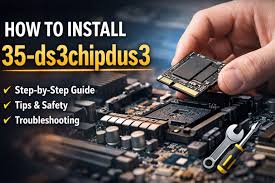
Installing specialized hardware or firmware like the 35-DS3ChipDUS3 can feel intimidating at first glance. The naming alone sounds complex, and if you’re not careful, a small misstep can lead to frustrating errors. But once you understand the process step by step, it becomes far more manageable—and even satisfying.
This guide walks you through everything you need to know, from preparation to final setup, using clear, practical explanations. Whether you’re a beginner or someone with light technical experience, you’ll find this walkthrough easy to follow.
Understanding the 35-DS3ChipDUS3
Before jumping into installation, it’s worth understanding what you’re working with.
The 35-DS3ChipDUS3 is typically used as a specialized chip/module designed for system enhancement, hardware integration, or firmware-level control depending on its application. It may be used in embedded systems, custom computing setups, or performance optimization scenarios.
In simpler terms: it acts as a component that upgrades or enables specific functionality within a device.
What You’ll Need Before Installation
Preparation is where most installation attempts either succeed or fail. Make sure you have the following ready:
- Compatible system or motherboard
- Updated drivers or firmware files
- Installation utility or software package
- Screwdriver or hardware tools (if physical installation is required)
- Stable power supply
- Backup of your system data
Skipping preparation often leads to compatibility issues later, so don’t rush this step.
Step-by-Step Installation Process
1. Verify Compatibility
Start by confirming that your system supports the 35-DS3ChipDUS3.
Check:
- Device specifications
- Supported chipsets
- Operating system compatibility
If your system isn’t compatible, installation may fail or cause instability.
2. Download Required Files
Visit the official source or trusted provider to download:
- Latest firmware or drivers
- Installation software
- Configuration tools
Avoid unofficial sources, as corrupted files can damage your system
3. Power Down and Prepare Hardware
If your installation involves physical hardware:
- Shut down your system completely
- Disconnect power cables
- Ground yourself to avoid static damage
Carefully open the system and locate the correct slot or connection point.
4. Install the Chip
Insert the 35-DS3ChipDUS3 into its designated slot.
Make sure:
- It fits securely
- There’s no forced insertion
- Connections align properly
Improper placement is one of the most common causes of failure.
5. Boot and Install Software
Once the hardware is installed:
- Turn your system back on
- Run the installation software
- Follow on-screen instructions
During this stage, the system will detect the new component and configure it
6. Configure Settings
After installation:
- Open the configuration panel
- Adjust performance or system settings
- Apply recommended defaults if unsure
Fine-tuning ensures optimal performance
7. Restart and Test
Restart your system and test functionality.
Look for:
- System stability
- Improved performance
- Proper recognition of the chip
If everything works smoothly, you’ve successfully completed the installation.
A Quick Comparison: Manual vs Guided Installation
| Feature | Manual Installation | Guided Installation Tool |
|---|---|---|
| Ease of Use | Moderate | Very Easy |
| Error Risk | Higher | Lower |
| Customization | High | Limited |
| Time Required | Longer | Faster |
| Recommended For | Advanced users | Beginners |
If you’re new, guided tools are safer. If you want full control, manual installation is better.
Common Issues and How to Fix Them
Even with careful installation, issues can happen. Here are some common ones:
1. System Not Detecting the Chip
- Re-seat the chip
- Check compatibility
- Update BIOS or firmware
2. Installation Software Fails
- Re-download files
- Run as administrator
- Disable antivirus temporarily
3. System Crashes or Instability
- Reset configuration settings
- Update drivers
- Check power supply
Application in a Practical Scenario
Imagine you’re upgrading a custom-built system for better performance. You install the chip, but after booting up, nothing changes. After troubleshooting, you realize the drivers weren’t properly installed.
This happens more often than people expect—installation isn’t just about hardware; software plays an equally critical role.
A Personal Insight
I once rushed through a similar installation without double-checking compatibility, and the system simply refused to recognize the component—it was a reminder that preparation saves far more time than troubleshooting later.
Subtle Advantage Most People Miss
One overlooked benefit of installing components like the 35-DS3ChipDUS3 properly is long-term system efficiency. When configured correctly, it doesn’t just add functionality—it helps your system run more smoothly, reduces strain on other components, and can even extend overall lifespan. That’s something many users don’t realize until they compare performance before and after.
Best Practices for a Smooth Installation
- Always read official documentation
- Keep backup files ready
- Avoid multitasking during installation
- Use stable power (UPS recommended)
- Double-check every connection
These small habits make a big difference.
Read More: 111.09.150.182 Explained: Meaning, Safety & Details
Conclusion
Installing the 35-DS3ChipDUS3 doesn’t have to be complicated. With the right preparation, careful execution, and a bit of patience, you can complete the process confidently.
The key is to approach it step by step—verify compatibility, install carefully, configure properly, and test thoroughly. Once done correctly, you’ll not only unlock new capabilities but also improve your system’s overall performance and reliability.
FAQs
1. What is the 35-DS3ChipDUS3 used for?
It’s typically used to enhance system functionality, enable specific features, or improve performance depending on the setup.
2. Do I need technical expertise to install it?
Not necessarily. Beginners can follow guided tools, while advanced users can opt for manual installation.
3. Can installation damage my system?
Only if done incorrectly. Following proper steps minimizes any risk.
4. Why is my system not detecting the chip?
This is usually due to improper installation, outdated drivers, or compatibility issues.
5. How long does installation take?
It typically takes 20–45 minutes depending on your experience and system complexity.